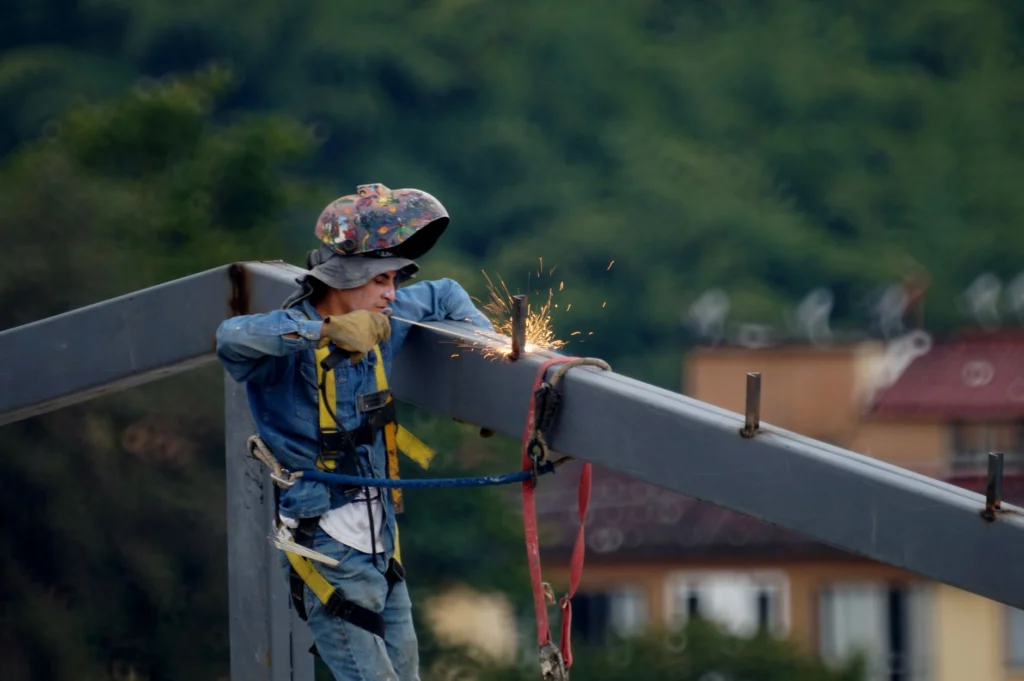
Of every hazard on a jobsite, one kills more construction workers than any other, year after year, with grim consistency: the fall. Not a freak event. Not bad luck. A preventable fall from a roof, a ladder, a scaffold, or an unprotected edge. The construction industry has known this for decades, OSHA has built an entire national campaign around it, and the leading cause of death in the trade still hasn’t changed. This is a long read, because falls deserve more than a poster in the break room. Here’s what the data actually says, why workers keep falling, and a concrete playbook for getting your fall incidents to zero.
The Numbers Don’t Lie
Construction is the most dangerous industry in America by raw count. In 2024, it recorded more on-the-job deaths than any other sector—over 1,000 fatalities—according to the U.S. Bureau of Labor Statistics’ Census of Fatal Occupational Injuries. And the single largest share of those deaths came from one cause: falls to a lower level, which killed close to 400 workers in that year alone.
This is not a one-year blip. Falls have been the leading cause of construction death for as long as the data has been tracked, and OSHA estimates that eliminating falls alone would save more than 300 lives every single year. The trend is moving the wrong way, too: research from CPWR – The Center for Construction Research and Training found that fatal injuries in construction rose nearly 40% between 2011 and 2022.
If the human toll isn’t enough, the regulatory record tells the same story. Fall Protection (OSHA standard 1926.501) has been the agency’s single most-cited violation for 14 consecutive years. In fiscal year 2024 there were 6,307 fall-protection citations—more than double the number-two standard—and fall-protection violations drove nearly $50 million in proposed fines. When the same hazard tops the citation list for over a decade, it’s not an enforcement quirk. It’s an industry-wide habit that hasn’t been broken.
A few more numbers worth keeping in front of your crews:
- Roofs are the deadliest. Roughly one-third of all fatal falls to a lower level in construction are falls from roofs, the largest single category—followed closely by falls from ladders.
- The “Focus Four” dominate. Falls, struck-by, caught-in/between, and electrocution—OSHA’s Construction Focus Four—together account for about 70% of all construction deaths. Falls are the biggest of the four.
- Small heights still kill. Fatal falls happen from ladders, single-story roofs, and scaffolds—not just high-rises. A fall of 10 to 15 feet onto concrete or rebar can be fatal.
Why Workers Fall
Falls aren’t mysterious. They cluster around a handful of predictable situations, and naming them is the first step to designing them out of your jobsite:
- Unprotected edges and leading edges — roofs, decks, and floors under construction where no guardrail or warning line exists yet.
- Floor holes and openings — skylights, shafts, and stairwell openings that aren’t covered, marked, or guarded.
- Ladders — wrong ladder for the job, improper angle, overreaching, climbing with full hands, or a ladder set on uneven ground.
- Scaffolds — incomplete planking, missing guardrails, improper access, or scaffolds that were never inspected by a competent person before the shift.
- Aerial and scissor lifts — workers not tied off in a boom lift, or climbing out of the basket at height.
- Fragile or weather-affected surfaces — skylights mistaken for solid roof, or wet, icy, and windy conditions that turn routine work hazardous.
Notice what’s not on that list: “careless workers.” The vast majority of falls trace back to a missing system—no anchor point, no guardrail, no inspection, no plan—rather than a single reckless individual. That’s good news, because systems are something management controls.
The OSHA Framework: Plan, Provide, Train
OSHA’s National Campaign to Prevent Falls in Construction distills decades of investigation into three words: Plan. Provide. Train. It’s simple on purpose—because simple is what actually gets followed in the field.
1. Plan ahead to get the job done safely
Before work starts, decide how every task at height will be done and what fall protection it requires. Build it into the estimate and the schedule—safety equipment and the time to use it are project costs, not afterthoughts. OSHA generally requires fall protection at six feet in construction (four feet in general industry, and any height over dangerous equipment). Identify those tasks up front, pick the anchor points, and make sure the gear is on site before the crew is.
2. Provide the right equipment
Not all fall protection is equal. The recognized hierarchy of fall protection runs from most to least effective, and you should always reach for the highest level the work allows:
- Eliminate the hazard — do the work at ground level where possible (prefabricate on the ground, then lift it).
- Passive protection — guardrails, covers, and barriers that protect everyone without requiring any action from the worker. This is the most reliable on-height protection because it doesn’t depend on a person clipping in.
- Fall restraint — a harness and lanyard rigged so the worker physically can’t reach the edge.
- Fall arrest — a personal fall arrest system (PFAS) that stops a fall in progress. Remember the ABCDs: a solid Anchor, a full-Body harness, a Connector (shock-absorbing lanyard or self-retracting lifeline), and a plan to Descend/rescue.
- Administrative controls — warning lines, safety monitors, and controlled-access zones. These are the weakest because they rely entirely on attention and behavior—use them only when nothing higher is feasible.
One detail crews routinely miss: a personal fall arrest system is only as good as its rescue plan. A worker left hanging in a harness can suffer suspension trauma in minutes. If your answer to “how do we get them down?” is “call 911 and hope,” you have equipment, not a system.
3. Train everyone to use the equipment
Gear in a gang box prevents nothing. The fact that Fall Protection Training (1926.503) is itself a perennial OSHA top-10 violation tells you how often this step gets skipped. Every worker exposed to fall hazards should be able to recognize them, select and inspect their equipment, and know exactly how it’s anchored and used on this jobsite. Inspect harnesses and lanyards before every use, retire any component that’s been in a fall, and re-train when conditions, equipment, or workers change.
A Practical Fall-Prevention Checklist
Turn the framework into a daily habit. Before any work at height:
- Are all leading edges and openings guarded, covered, or marked—and are covers rated and secured against the load?
- Has a competent person inspected every scaffold and ladder this shift?
- Is the right ladder being used at the right angle (roughly 4:1), secured, and extending three feet above the landing?
- Does every PFAS have a rated anchor, an inspected harness and connector, and enough clearance below to arrest a fall before the worker hits a lower level?
- Is there a written, practiced rescue plan for anyone in a harness?
- Have skylights and fragile surfaces been identified and protected?
- Is weather being accounted for—wind, ice, rain—before lift or roof work begins?
- Does everyone on the crew know the day’s fall-protection plan, not just the foreman?
The Business Case for Getting This Right
Safety is first a moral obligation—every worker deserves to go home. But for owners weighing the cost of doing it right, the math is overwhelmingly on the side of prevention. OSHA’s business-case data estimates that a typical 100-employee construction firm carries roughly $197,000 a year in injury-related costs—about $87,000 in direct workers’ compensation costs and another $110,000 in indirect costs like lost productivity, retraining, schedule delays, and repairs.
And direct claim costs are only the visible tip. A serious fall ripples outward into:
- A higher experience modification rate (EMR), which raises your workers’ comp premiums for years and is often used by owners to prequalify—or disqualify—bidders.
- OSHA penalties, which run into the tens of thousands per willful or repeat violation.
- Lost bonding capacity and lost work, as a damaged safety record closes doors with sureties and general contractors alike.
- Schedule and morale damage that’s hard to quantify and harder to undo.
Run your own numbers with OSHA’s $afety Pays estimator and the picture is consistent: guardrails, harnesses, training time, and a competent person on site cost a fraction of a single serious incident. Prevention isn’t a cost center. It’s one of the highest-return investments a contractor can make.
The Bottom Line
Falls remain the leading cause of death in construction not because the problem is unsolved, but because the solution—plan, provide, train—has to be executed on every job, every day, by everyone. The companies that get to zero treat fall protection like any other part of running a tight operation: planned into the bid, scheduled into the work, and tracked until it’s a habit instead of a reminder. That same discipline—organized projects, clear plans, nothing left to chance—is what separates the contractors who grow from the ones who get stuck firefighting. At BuildBoss, we’re all about helping you run that kind of operation. Build like a boss, and bring everyone home.
Sources: U.S. Bureau of Labor Statistics, Census of Fatal Occupational Injuries; OSHA Top 10 Most Cited Standards (FY2024) and Fall Prevention Campaign; CPWR – The Center for Construction Research and Training, Construction Chart Book. Verify current-year figures before publishing.
Ready to stop chasing bids by email? BuildBoss Bid Pro sends invitations, collects bids and keeps every trade organized in one place.
start my 14-day free trial See what general contractors get